Microcurrent devices and stress: why tension in your face may be limiting your results
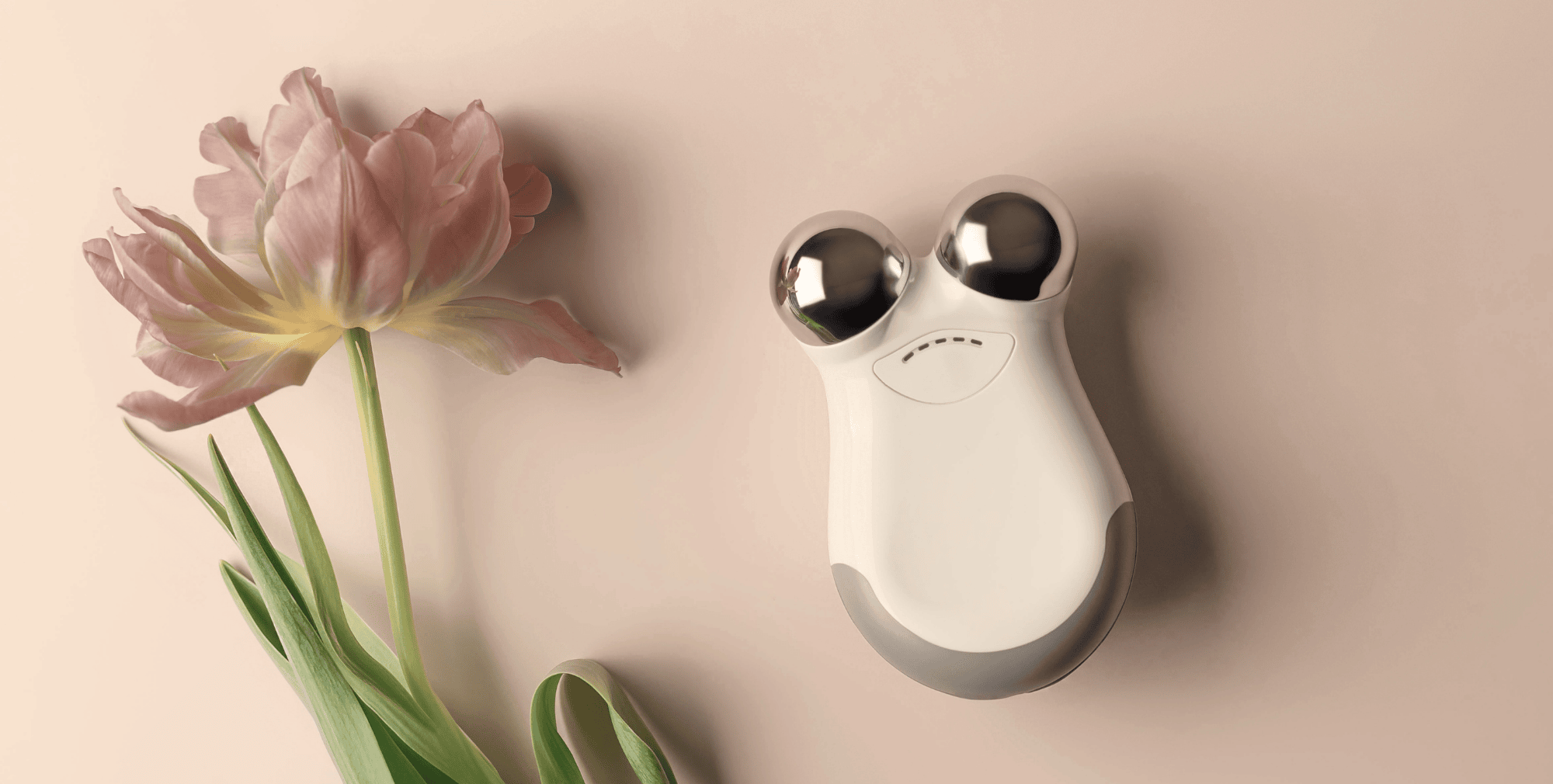
You bought the NuFace. Or the Bear. Or the Ziip. You use it three times a week, you follow the app, you apply the conductive gel. And the results are... fine. Not bad. But not the dramatic lift-and-tone that the before-and-after photos promised.
Before you blame the device, consider what your face is doing while you use it.
The tension problem
Microcurrent works by sending low-level electrical signals to your facial muscles, mimicking the body's natural ionic flow. The current stimulates the muscle to contract and release, boosting ATP production, encouraging protein synthesis, and (with consistent use) creating a more toned, lifted appearance. NuFace calls it "fitness for your face," and the analogy is apt.
But here's where that analogy gets interesting. If you went to the gym and tried to do a bicep curl while your arm was already clenched in a fist, locked tight from shoulder to fingertip, the exercise would be less effective. The muscle can't move through its full range when it's already contracted. The same principle applies to your face.
Chronic stress causes habitual tension in the facial muscles, particularly the masseter (jaw), temporalis (temples), and frontalis (forehead). A 2024 review in Experimental and Therapeutic Medicine confirmed that stress is the most widely acknowledged factor in bruxism and involuntary jaw clenching, and that elevated cortisol increases head and neck muscle tonicity. If you're clenching your jaw while you work, holding tension across your forehead during difficult conversations, or grinding your teeth at night, those muscles are in a state of chronic contraction by the time you pick up your microcurrent device.
The device is trying to stimulate a muscle that's already exhausted from overwork. The current still reaches the tissue, but the response is blunted. A tense muscle has less capacity to contract and release in the way the microcurrent is designed to trigger.
What relaxed tissue gives your device
When your facial muscles are in a relaxed, neutral state, the microcurrent can do what it's designed to do: contract and release the muscle through its natural range, stimulate blood flow, and promote ATP production in cells that are ready to receive the signal. Blood flow matters here too. Relaxed muscles have better circulation than tense ones. More blood means more oxygen and nutrients reaching the tissue while the device works.
This is the same blood flow argument that applies to red light therapy. Cortisol constricts peripheral blood vessels. A calm nervous system dilates them. The treatment works on both the muscular level (relaxed muscles respond better to stimulation) and the circulatory level (more blood flow means more delivery of the cellular resources the treatment triggers).
Most microcurrent advice focuses on technique: the angle of the device, the speed of the glide, the direction of the stroke. These all matter. But the state of the tissue underneath matters too, and almost nobody talks about it.
Preparing your face before a session
Before you pick up your microcurrent device, spend a few minutes releasing the tension that's already there.
Check your jaw. Right now, as you read this, where are your teeth? If they're touching, your jaw is clenched. The resting position is lips together, teeth apart, tongue resting lightly on the roof of your mouth. Most people who carry stress in their jaw don't realise how rarely they achieve this position during the day.
Release the forehead. Place your fingertips on your forehead and notice if there's tension. Consciously smooth it. The frontalis is one of the most common tension-holding areas and one of the key treatment zones for microcurrent devices targeting forehead lines.
Breathe slowly for two minutes. Long exhales activate the parasympathetic nervous system, which directly reduces muscle tone throughout the face and jaw. Box breathing (four counts in, hold four, out four, hold four) is the simplest method that works.
Or follow a guided frequency routine. Sound frequencies in the theta range (4 to 8 Hz) support the shift from sympathetic (tense, alert) to parasympathetic (calm, relaxed) dominance. A five to ten minute session before picking up your device gives your facial muscles time to release habitual tension and return to a neutral, receptive state.
The Skin Resonance app includes a Tension and Tightness routine designed for exactly this. Try a free 10-minute session to feel the difference before your next microcurrent treatment.
Try it freeThe jaw clenching connection
This article has focused on how tension affects microcurrent results, but the jaw clenching issue runs deeper than that. Chronic bruxism affects between 60 and 70% of the population, though only about one in four people with symptoms realise they have it. Research published in the Journal of Cosmetic Dermatology links chronic bruxism to masseter muscle hypertrophy (a squarer, heavier jawline), premature facial ageing, and loss of facial volume.
If you're using a microcurrent device to achieve a more defined, lifted jawline while simultaneously clenching that jawline into a square, overworked shape for eight hours a day, the two forces are working against each other. Addressing the tension is not just about getting more from your device. It changes the broader relationship between stress, your facial muscles, and how your face looks over time.
Sound frequency routines aren't a treatment for bruxism. If you have severe jaw pain or TMJ issues, see a dentist or physiotherapist. But for the everyday, stress-driven tension that most of us carry without realising it, a structured relaxation practice before and during your skincare routine can make a noticeable difference to both how the device performs and how your face holds itself through the day.
Skin Resonance includes twelve concern-based frequency routines, including one specifically for Tension and Tightness and another for Hormonal Balance Support. Each has a "With skincare" version that times your microcurrent device, red light mask, gua sha, or other tools into the frequency session. Read the science page for the full evidence base, or see how frequency routines pair with red light therapy and LED mask sessions.
Skin Resonance is available at skinresonance.com for €15. Launch price, one-time purchase, all routines, all future updates.
Or try the free 10-minute routine first →