How to pair your red light mask with a frequency routine
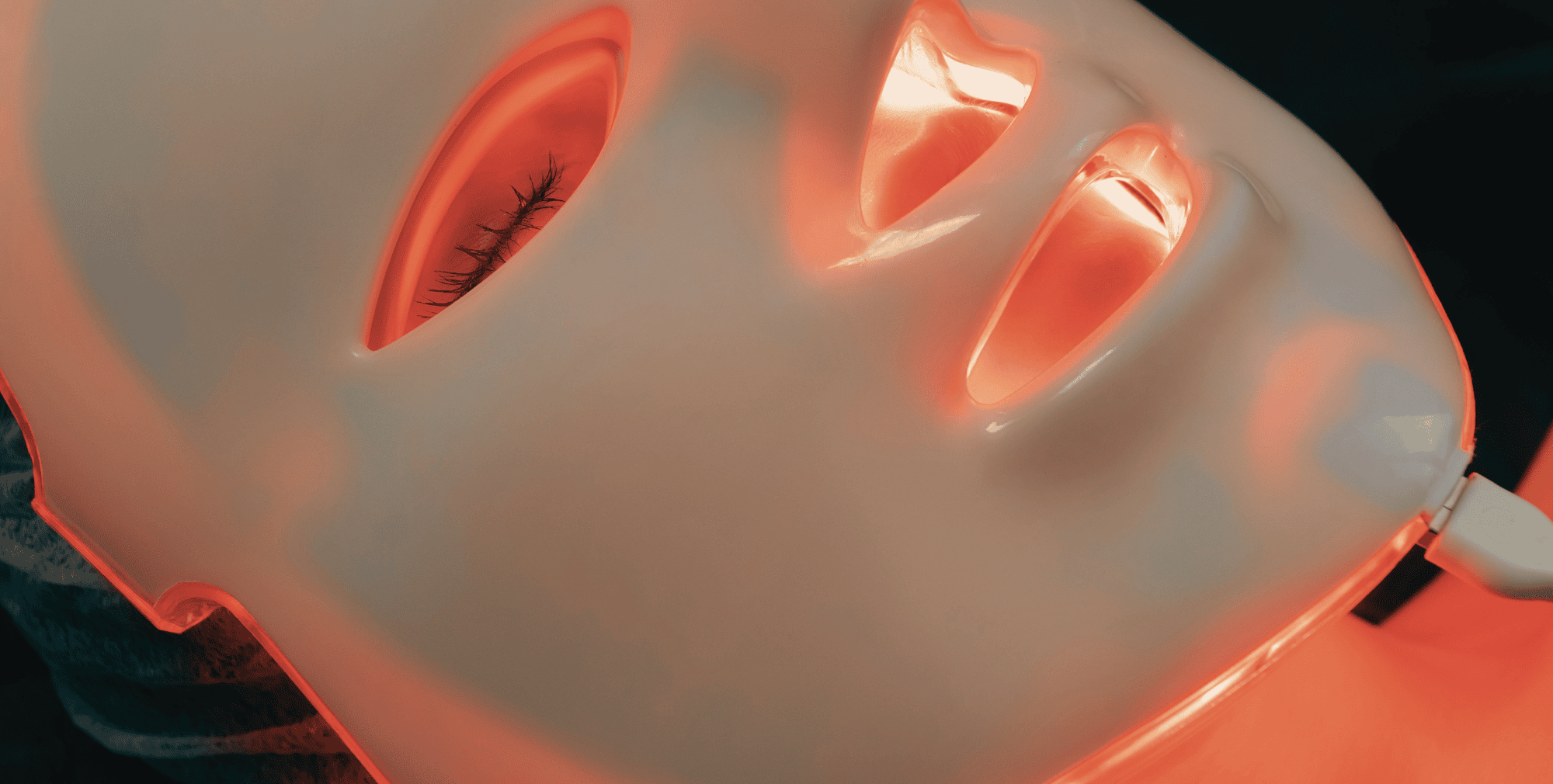
If you own a red light therapy mask, you already know the basics. Put it on, wait ten to twenty minutes, take it off. The device does its work at the cellular level, stimulating fibroblasts, boosting ATP production, encouraging collagen synthesis. The research on this is solid and growing.
What gets less attention is what's happening in your body during those ten to twenty minutes, and how much that internal state affects what the light can actually do.
How red light works on skin
Red light in the 620 to 700 nm range penetrates the skin and is absorbed by chromophores in the mitochondria, particularly cytochrome c oxidase. That absorption triggers a chain of events: increased ATP production, upregulation of collagen gene expression, and reduced activity of matrix metalloproteinases (the enzymes that break collagen down). A 2024 review in the International Journal of Molecular Sciences confirmed that red light at 630 nm and above consistently shows improvement in wrinkle depth and collagen density across clinical trials.
A controlled trial published in Photomedicine and Laser Surgery found that red and near-infrared LED treatment produced statistically significant increases in intradermal collagen density, with 87% of participants reporting improved skin tone and firmness. And a 2021 study in the International Journal of Cosmetic Science showed that even low-level red and near-infrared light increased the expression of collagen and elastin genes in human fibroblasts.
The mechanism is well supported. The question is whether you're giving it the best conditions to work in.
The blood flow problem
Red light therapy depends on blood flow. The light stimulates cellular activity in the dermis, but the raw materials for that activity (oxygen, nutrients, the building blocks of collagen) arrive via blood. More blood flow to the skin means more efficient delivery of those materials. Less blood flow means the cellular machinery is running but undersupplied.
This is where stress becomes relevant. Cortisol, the hormone your body produces in response to chronic stress, has a well-documented vasoconstricting effect on peripheral blood vessels, including those supplying the skin. A study in Clinical Science demonstrated that cortisol directly induces dermal vasoconstriction, and Hypertension published research showing increased vasoconstrictor sensitivity to glucocorticoids in stressed individuals. Cortisol also suppresses the production of nitric oxide and prostacyclin, both of which are vasodilators that help keep blood vessels open.
In plain terms: when you're stressed, the blood vessels in your skin narrow. Less blood reaches the dermis. The red light is doing its job at the cellular level, but the cells have fewer resources to work with.
Calming the nervous system first
The logic of pairing a frequency routine with your red light session runs along this chain in reverse. If you can reduce cortisol and calm the sympathetic nervous system before (or during) the light treatment, you create conditions where blood vessels dilate, blood flow to the skin increases, and the cellular response to the light has more to work with.
This isn't speculative. The relationship between relaxation and peripheral vasodilation is well established in physiology. When the parasympathetic nervous system is dominant (the state your body enters during deep rest), blood flow to the skin increases measurably. That's why your hands and face feel warmer when you're relaxed and cooler when you're anxious.
Sound frequencies can support this shift. Binaural beats in the theta range (4 to 8 Hz) and specific solfeggio tones have been associated with reduced cortisol and increased parasympathetic activity in published research. The evidence base for binaural beats specifically is still developing (we've written about this honestly on our science page), but the broader principle of sound-based relaxation reducing stress markers is supported by multiple studies.
Skin Resonance pairs frequency routines with red light mask timing. Try a free 10-minute routine to feel how it works.
Try it freeTiming a session with your mask
Most red light masks recommend 10 to 20 minutes per session, three to five times a week. A frequency routine can be structured around that window in a few ways.
The simplest approach: start the frequency routine five minutes before you put on the mask. Those first five minutes are a settling period. Lie down, close your eyes, let the sound begin calming your nervous system. By the time the mask goes on, your body is already shifting toward the parasympathetic state where blood flow to the skin is at its best.
A fuller approach uses the entire session. The Skin Resonance app includes "With skincare" versions of every routine that integrate tool timing directly. The Ageing and Elasticity routine, for example, starts with a Schumann resonance grounding step, moves into a 528 Hz solfeggio tone during the red light mask phase, then transitions to a delta frequency for deep rest after the mask comes off. The frequency sequence is designed to move you progressively deeper into calm, with the mask positioned at the point where your nervous system is most settled.
If your mask has a fixed timer, you don't need to synchronise anything. Start the frequency routine, put the mask on when you're ready, and let both run. The mask will turn itself off. The frequency continues, carrying you into deeper rest. For evening sessions, this means you can move directly from the mask into pre-sleep calm without interruption.
What the research supports and where it stops
The individual components here are well supported. Red light therapy stimulates collagen production (multiple RCTs, systematic reviews). Cortisol constricts dermal blood vessels (published in Clinical Science, Hypertension, and elsewhere). Sound-based relaxation reduces cortisol markers (published in JMIR Mental Health, International Journal of Stress Management). Parasympathetic activation increases peripheral blood flow (standard physiology).
No study has tested this specific combination as a single protocol, which is true of most paired skincare approaches. But each step in the chain is independently supported, and the physiological logic connecting them is straightforward: less stress, more blood flow, better conditions for the light to do its work. You're not adding anything unproven. You're removing a barrier (stress-driven vasoconstriction) that the research shows gets in the way.
The Skin Resonance app includes twelve concern-based routines, each with a "With skincare" version that times your tools (red light masks, LED devices, gua sha, rollers) into the frequency sequence. The cortisol-skin connection and delta sleep and collagen articles cover the underlying research in more detail.
Skin Resonance is available at skinresonance.com for €15. Launch price, one-time purchase, all routines, all future updates.
Or try the free 10-minute routine first →