What to do during your red light mask session instead of scrolling your phone
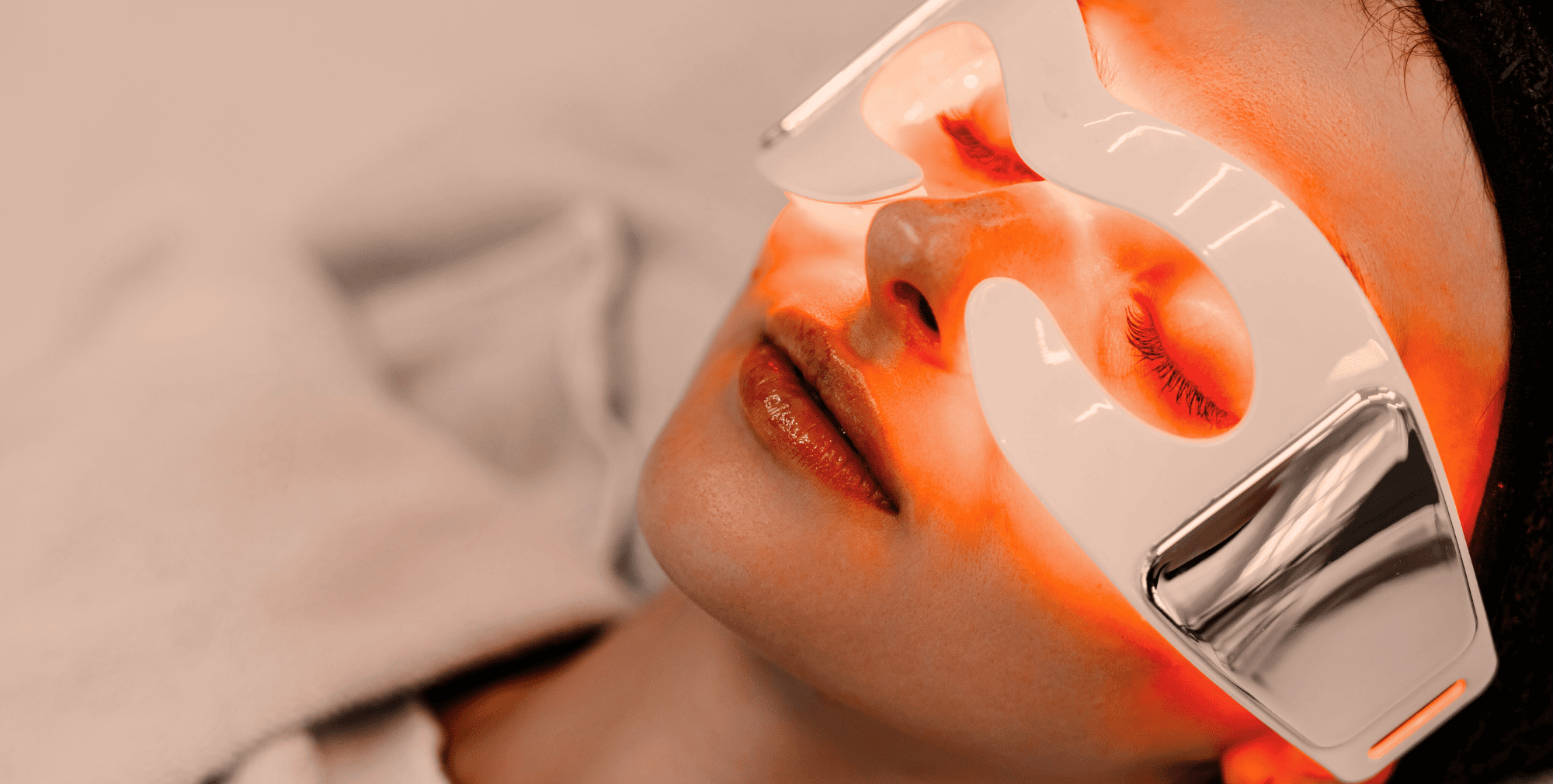
You put on the mask. You set the timer. And then you lie there for fifteen minutes trying not to check your phone.
If you own a red light therapy mask, you know this routine. The device is doing its work (stimulating collagen, boosting ATP production in your skin cells), but you're just... waiting. Most people end up scrolling Instagram, answering emails, or mentally running through tomorrow's to-do list. Which is fine, except that all of those things keep your nervous system in exactly the state that makes the treatment less effective.
There's a better way to spend those minutes. And it turns out what you do during your session can affect how well the light works.
Why scrolling undermines your session
Red light therapy depends on blood flow. The light stimulates cellular activity in the dermis, but oxygen and nutrients reach those cells via blood. When blood flow to the skin is strong, the treatment has more to work with. When blood flow is restricted, the cells are running but undersupplied.
Stress constricts blood vessels in the skin. This is well documented: cortisol enhances vasoconstrictor sensitivity, reduces production of vasodilators like nitric oxide, and narrows the peripheral blood vessels that supply your face and body. Scrolling social media, reading the news, or thinking about work all keep cortisol elevated. You're lying still, but your nervous system is not resting.
The irony is hard to miss. You've invested in a device designed to repair and rejuvenate your skin, and then you spend the treatment time doing the one thing that works against it.
Five things to do instead
1. Just breathe. Box breathing (four counts in, four counts hold, four counts out, four counts hold) is the simplest way to shift from sympathetic to parasympathetic dominance. Two minutes of this measurably reduces heart rate and cortisol. You don't need an app. You don't need to be good at it. Just count.
2. Listen to a body scan meditation. Any guided body scan will work. The act of moving your attention slowly through your body draws the nervous system into a calm, present state. Fifteen minutes is the right length for most body scans, which happens to be the right length for most red light sessions.
3. Play ambient sound. Rain, ocean, birdsong, brown noise. Not music with lyrics or structure that engages your thinking brain. Something textured and repetitive that gives your auditory system something to settle into. This is less effective than active relaxation techniques but much better than silence if silence makes you fidgety.
4. Do nothing. Seriously. Lie there with your eyes closed and let your mind wander. The boredom itself is productive. Your brain shifts into default mode network activity, which is associated with reduced cortisol and increased parasympathetic tone. The urge to pick up your phone is the exact signal that your nervous system is too activated. Sitting with that urge, even uncomfortably, is the treatment working.
5. Follow a guided frequency routine. This is the most structured option, and the one that targets the physiology most directly. Specific sound frequencies (binaural beats in the theta range, solfeggio tones at particular frequencies) have been associated with measurable reductions in cortisol and increases in parasympathetic activity. A timed routine gives you something to follow without engaging the planning, problem-solving parts of your brain. The sound does the work of calming your nervous system while the light does the work of stimulating your cells.
Skin Resonance includes "With skincare" routines that time sound frequencies around your red light mask session. Try a free 10-minute routine to feel how it works.
Try it freeA simple session structure
If you want a framework that doesn't require any apps or equipment beyond your mask and a pair of headphones, try this:
Minutes 1 to 3: Put the mask on. Close your eyes. Take ten slow breaths, each one longer than the last. Don't force anything. Just let the exhale get gradually longer until you feel your shoulders drop.
Minutes 3 to 12: Listen to ambient sound or a guided frequency routine. Keep your eyes closed. If your mind wanders, let it. Don't try to meditate perfectly. The goal is not focus. The goal is calm.
Minutes 12 to 15: The mask timer is winding down. Stay still. Notice how your face feels. The warmth from the LEDs, the weight of the mask, the temperature of your hands. This is proprioceptive attention, and it keeps you in the parasympathetic state through the end of the session rather than snapping back to alert mode the moment the timer beeps.
That's it. No special skills. No prior experience. Just a deliberate decision to spend the session time helping the treatment work rather than working against it.
The bigger picture
Most red light therapy advice focuses on the device: which wavelength, how many nanometres, how close to hold it, how many minutes. All of that matters. But the variable that gets almost no attention is the state of your body while the light is working. A relaxed body with dilated blood vessels and low cortisol provides a better environment for the cellular processes the light triggers. A stressed body with constricted blood vessels and elevated cortisol provides a worse one.
You don't need to do anything complicated to shift that balance. You just need to put the phone down and give your nervous system the same fifteen minutes you're giving your skin.
For anyone who wants to understand the physiology behind this in more detail, we've written a separate article on the research connecting cortisol, blood flow, and red light therapy outcomes, with eight cited sources.
The Skin Resonance app includes twelve concern-based routines, each with a "With skincare" version that times your frequency session around your red light mask, LED device, gua sha, or other tools. The app tells you when to start each tool and which frequency supports that stage of your routine.
Skin Resonance is available at skinresonance.com for €15. Launch price, one-time purchase, all routines, all future updates.
Or try the free 10-minute routine first →